Tistory’s Blog-Decorating Culture and the Demand for Stickers
- Tistory was never designed to look like everyone else’s home.
- The changes introduced in 2018 made customization easier.
- A sticker is not an image that displays emotion; it is a signal for reading.
- Why people spend money on small images
- Demand for Tistory stickers is a request to be recognized as an individual.
- What WordPress needs to learn is not the character, but how to use it.
- The goal of customization is not extravagance, but an order that people remember.
- Frequently Asked Questions
- WordPress Plugins
When you open a Tistory post, something often catches your eye before the body text does: a tiny character beneath the title, a hand-drawn icon in the sidebar, or a brief facial expression at the end of the article.
These decorations may look like irrelevant extras, but on Tistory they have long served as signs of what a blog is like. A few small images can tell visitors what kind of person the writer is, how much they care about the space, and what tone they can expect.
In my view, Tistory’s decorating culture was never simply a hobby focused on making screens look pretty. It was a culture of reshaping the reading environment to suit one’s personal taste, and the demand for stickers is what remains of that culture in its smallest and most accessible form.
Tistory was never designed to look like everyone else’s home.
Tistory launched in 2006. As Kakao explained in materials about its 2018 redesign, one of the service’s defining features from the beginning was the ability to edit HTML and CSS directly—something that set it apart from other blogging platforms.
HTML determines a page’s structure, while CSS controls its colors, sizes and layout. In simple terms, users were not limited to writing the content; they could also choose the color of the front door and arrange the rooms themselves.
That freedom soon developed into a kind of decorating competition. Some users chose black backgrounds with white text, while others gave photographs and menus prominent placement. Some blogs looked like diaries; others resembled miniature magazines.
Tistory’s official announcements also reflect this trend. In 2007, the service highlighted skins that users were adopting most widely, and in 2015 it held a competition for responsive web skins created by users.
Responsive web design automatically adjusts the size of text and images depending on whether a page is being viewed on a computer or a phone. This shows that Tistory users at the time were going beyond simple color changes and altering the structure of their pages themselves.
The changes introduced in 2018 made customization easier.
In October 2018, Tistory removed the invitation requirement for new users and introduced new skins and a home-cover feature. According to Kakao, home cover allowed users to arrange their landing page in different ways without directly editing HTML and CSS.
The change was significant. Previously, customizing a blog meant understanding code or searching for a skin made by someone else. Now users could choose elements such as thumbnail lists, galleries and sliders to build their home page.
Customization had moved from the realm of experts into the hands of ordinary users.
That is where stickers found their place. Changing an entire skin takes time, but adding a small character in the middle of a post is easy. Without rebuilding the whole page, a writer can change the tone of the blog.
If Tistory’s decorating culture is like renovating an entire house, stickers are more like placing a small ornament on a desk. The cost and effort are minimal, but the impression of the space changes.
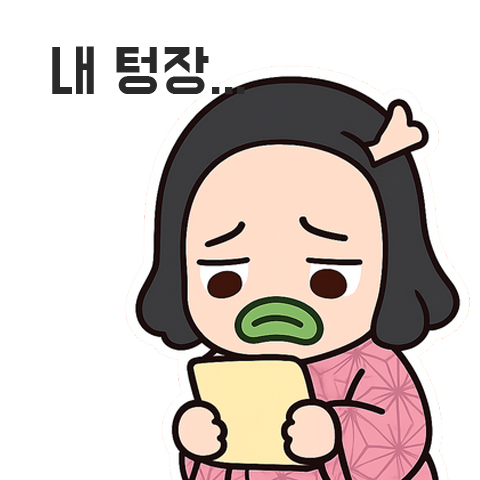
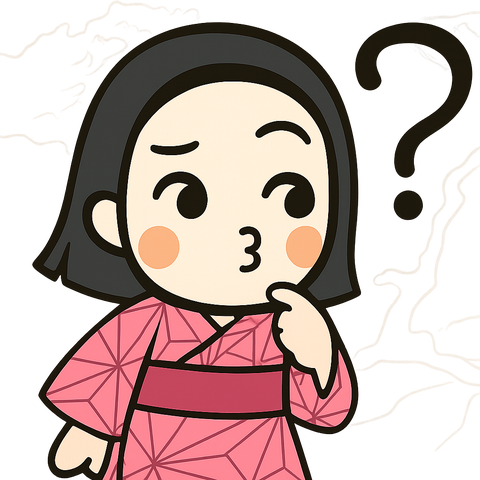
A sticker is not an image that displays emotion; it is a signal for reading.
A text-only article can feel cold even when the information is accurate. In posts made up of explanations—such as guides, reviews and practical advice—readers need occasional places to pause.
A small character or facial-expression graphic creates that pause. It is not necessarily a signal that something is funny, but a visual cue that says: you have made it this far, and it is time to move on to the next paragraph.
This effect is even more noticeable on mobile screens. Phones display fewer sentences at a time, and readers tend to respond first to changes between blocks of text rather than to the article as a whole. A well-placed image between paragraphs can make a long piece feel less cramped.
That does not mean more stickers automatically make a post easier to read. If the same character is repeated in every paragraph, it becomes noise rather than decoration. The main point gets buried, and readers can no longer tell what the writer is trying to emphasize.
My view is clear. Stickers should be used to control the pace of an article, not to exaggerate its emotions.
Why people spend money on small images
According to materials released by Kakao in November 2024, Kakao Emoticon had recorded approximately 700,000 individual emoticons and 280 billion cumulative sends since its launch in 2011. More than 2.5 million people had subscribed to Emoticon Plus.
Those figures show that characters have become more than simple decorations; they are now an everyday means of expression. Even with the same words—“I understand”—the sense of distance and the mood can change depending on which character nods in response.
Kakao also reported that 17 million people had tried the mini emoticons released in 2024. Small images that can be placed alongside text spread quickly because they add atmosphere without requiring a lengthy explanation.
The surprising point is that a character’s popularity does not necessarily make it a better choice. A famous character is easy to recognize, but its established image can overshadow the subject of a blog. If visitors arrive expecting a personal record of daily life but feel as though they have entered a character-merchandise page, the blog loses its direction.
Demand for Tistory stickers is a request to be recognized as an individual.
Blogs are difficult to distinguish by content alone. Countless posts cover the same travel experiences, product descriptions and study notes. In such cases, readers remember not only the information but also the atmosphere of the page.
Stickers quickly establish that atmosphere. When a particular expression, color or placement is repeated, visitors find it easier to remember the writer’s space. It is not a form of branding that shouts like an advertisement, but a quiet marker that appears again and again.
That is why demand for character graphics is not limited to people who simply like cute things. Writers of highly professional material also look for small images to keep their articles from becoming overly stiff.
Copyright, however, is an unavoidable issue. Seeing Kakao Friends or a famous animated character on someone’s personal blog does not mean you can copy it onto another site. An image that appears free is not necessarily an image that is free to use.
The same principle applies when using characters on WordPress. Use only artwork you created yourself, images for which you have permission, or free resources with clearly stated terms of use. If you repeatedly upload images from unclear sources simply because they are cute, sorting out the images later can become a bigger task than managing the articles themselves.
What WordPress needs to learn is not the character, but how to use it.
Bringing Tistory’s culture to WordPress does not mean every blog needs to feature characters. The goal is to help visitors quickly sense the writer’s personality and read long articles more comfortably.
On WordPress, it is better to place stickers sparingly in set locations, such as at the beginning of a post, between subheadings or at the end. Image file sizes should also be reduced. If a picture intended to make the page more attractive slows it down, visitors will leave before they ever see the character.
Alt text is necessary as well. Alt text describes an image in words for people who cannot see it. Rather than writing simply “character image,” describe its function—for example, “a small cat waving and smiling.”
Another useful element is a coordinated set of images. If the expressions and color schemes vary wildly, the blog can look like a box of mismatched toys. Even choosing four or five expressions and a few icons for visual separation can make the page feel far more cohesive.
- Use images that do not obstruct the main text.
- Do not repeat one image in every paragraph.
- Check the source and terms of use.
- Make sure the images remain readable on a phone screen.
When these principles are followed, stickers shift from decoration to wayfinding. They reveal something about the writer without disrupting the flow of the article.
The goal of customization is not extravagance, but an order that people remember.
Tistory’s blog-decorating culture is no longer limited to people who are comfortable editing code. Skins and home-page features have become easier to use, while buying and using small images such as Kakao emoticons has also become part of everyday life.
That does not mean every blog needs to become complicated. Decoration is less like makeup covering up a weakness in the writing than like editing that communicates the character of the work.
If I were running a WordPress site, I would not begin by choosing a character. I would first decide what readers would be reading, where they might pause, and what kind of atmosphere I wanted them to remember. Only then would I add as many images as necessary.
That is also why demand for stickers is unlikely to disappear. People want not the image itself so much as the sense of familiarity and the memorable space it creates.
No matter how smart a blog may be, without even one facial expression it can sometimes look like an instruction manual.
Frequently Asked Questions
Q. Will adding lots of stickers to a Tistory post keep visitors on the page longer?
A. You cannot assume that stickers alone will increase time on page. They can, however, help break up paragraphs and convey the tone of an article, so it is best to use them sparingly and where they fit the content.
Q. Can I use stickers featuring famous characters on WordPress?
A. Only within the scope permitted by the copyright holder or creator. The fact that you downloaded an image from search results does not mean that commercial use or redistribution is allowed.
Q. Are stickers and emoticons the same thing?
A. They are used similarly in everyday conversation, but their functions can differ. Emoticons are primarily a way to express emotion in conversation, while blog stickers are decorative elements that help shape a post’s atmosphere and layout.