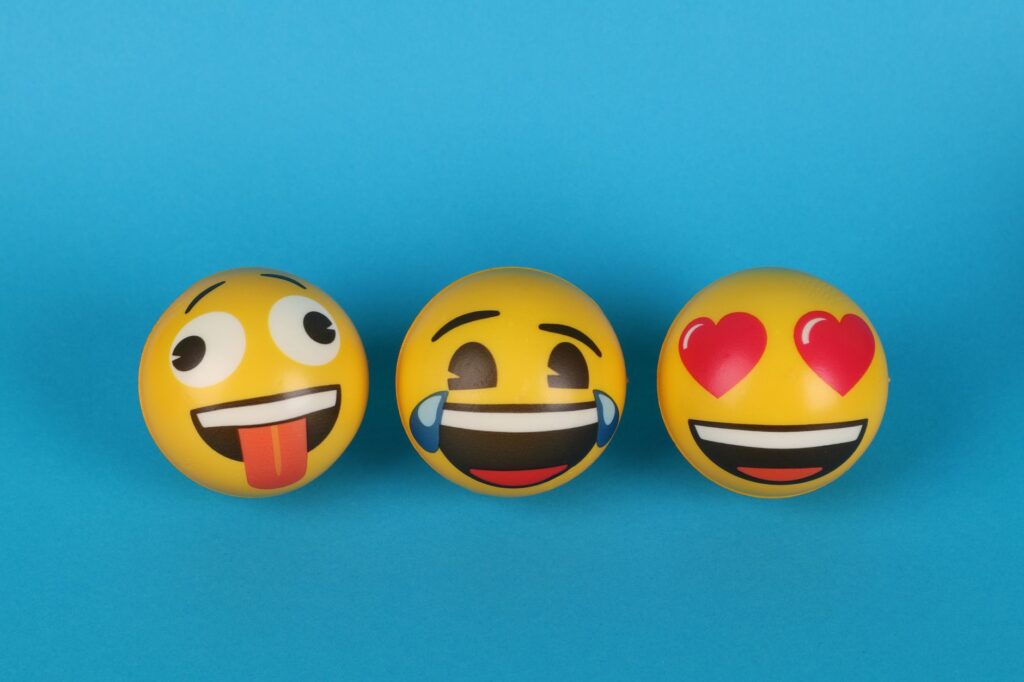
Emoji and engagement study summary: Effective when used appropriately, but counterproductive when overused
- It is more important to consider what an emoji can help with, rather than simply whether or not it exists.
- The reason it is most easily read when used in moderation.
- Emojis lose their effectiveness when used in place of complete sentences.
- Where might problems arise from excessive use of WordPress?
- How many of them will fit in my WordPress installation?
- Using DecoBlocks to divide decorative elements.
- Frequently Asked Questions.
- WordPress-related plugins
Will adding a smiling face to the end of WordPress article titles increase clicks? Will inserting characters and finger symbols in each sentence make the content seem more friendly?
The question that people searching for this article want to know is: where and how much should emojis be used to improve engagement?
Emojis can help to add meaning and nuance to text. However, as the number of emojis increases, engagement does not necessarily continue to rise.
The key point is not the quantity.
It is more important to consider what an emoji can help with, rather than simply whether or not it exists.
Here, “engagement” refers to whether the emoji was noticeable, but it also encompasses actions taken by the reader, such as liking the text, leaving a comment, or other reactions that lead to further interaction.
A 2021 study in the Journal of Interactive Marketing examined Twitter posts from well-known brands and celebrities. The study found that posts containing emojis tended to receive more likes and shares than posts without emojis.
In a 2022 study published in “Computers in Human Behavior,” researchers analyzed the relationship between emojis in brand-related posts on Instagram and consumer engagement. However, this result does not necessarily apply to all posts on WordPress.
It is not possible to reproduce the results of social media exactly.
The reason it is most easily read when used in moderation.
WordPress administrators are wondering if adding emojis to titles, summaries, buttons, and character stickers might make their content less rigid. They especially consider this option when they want to capture attention at a glance on smaller screens.
In a 2022 Instagram study, posts with emojis had an average of 72% more likes and 70% more comments than posts without emojis. However, the effect of emojis varied depending on how well they matched the tone of the sentence.
Do not include information based solely on numbers.
When an emoji that expresses joy is added after a positive message, the intended meaning of the message can be conveyed more easily. Conversely, if the emoji does not match the sentence, it can cause the reader to re-interpret the meaning of the text.
A study analyzing 64,121 tweets from 82 B2B brands in 2025 revealed unexpected results. While engagement was higher when emojis were used moderately compared to when they were not used at all, engagement decreased again when the level of emoji usage exceeded a certain point.
The relationship between the number of emojis used and the level of engagement is close to an inverted U-shape.
There is a suitable location.
Emojis lose their effectiveness when used in place of complete sentences.
Emojis are effective because they quickly add emotions and attitudes that are difficult to convey through text alone. They make the text less rigid and also serve to capture attention in a short visual space.
A 2021 study found that the use of emojis can make a brand feel more playful and approachable, and this is related to engagement. Importantly, the study revealed that emojis are more effective when placed before the main text and directly connected to the following content.
Emojis are more of a supplement than a description.
The 2023 “Tourism Management” study explained that emojis that express emotions are more suitable for content with emotional themes, while emojis that clearly convey meaning are more appropriate for promotional content. This is why, when choosing emojis, the function of the text should be prioritized over appearance.
Adding a single emoji related to the title of an event can enhance the content. However, replacing key words with emojis makes it difficult for both those searching and those reading to immediately understand the meaning.
Instead of conveying the meaning, it actually makes the text more difficult to read.
Where might problems arise from excessive use of WordPress?
When you try to customize things directly, problems often arise in very specific areas. For example, multiple indicators might appear in the title, sentences might be interrupted by elements in the main body, and buttons might only display images instead of text.
The points where readers encounter difficulties are also clear.
Simply reducing the number of decorations may not clearly establish the priority of information. DecoBlocks allows users to group related content into Section Boxes (Solid) instead of repeating emojis between sentences, and to highlight portions of sentences (Yellow).
You can insert a “Divider Line – Solid” between sections to divide the flow of text. The same decorative features are available in both the block editor and the classic editor, allowing you to apply them according to your preferred editing method.
At this point, the reader will focus on the number of decorative elements rather than the core message of the text. In professional guidance or important announcements, a lighthearted tone can actually undermine credibility.
A 2025 report on B2B research indicated that the excessive use of emojis in the body of the text, or using them in place of words, weakens the positive effects. Simply adding more emojis does not necessarily increase friendliness.
The idea that the more there is, the more familiar it becomes is a misconception.
It is also dangerous when the emotion expressed in a sentence and the emotion conveyed by an emoji do not match. A 2025 study by Collabra: Psychology involved 243 participants who rated individuals who sent messages with negative emojis attached to positive or neutral sentences as having lower competence.
Positive emojis were not always safe. When combined with negative sentences, they could be interpreted as disharmonious or insincere.
The limitations of manual correction go beyond simply counting the number of instances. It is necessary to simultaneously verify whether the emoji aids the sentence, conveys the intended emotion, and whether the reader actually took the desired action.
Simply counting the number is not enough; it misses the key point.
How many of them will fit in my WordPress installation?
There is no single answer that applies to all websites. Because previous research has primarily focused on Twitter and Instagram posts, it cannot be definitively stated that metrics such as dwell time, scrolling, comments, and button clicks will behave identically on WordPress sites.
Nevertheless, it is possible to determine a safe starting point based on the intended purpose.
- For light and friendly content or event announcements, test using 1 to 2 relevant emojis in the title, summary, and buttons.
- Please provide the Korean text you would like me to translate. I will translate it faithfully and completely into English, following all the guidelines you have provided.
- For professional and trustworthy writing: Omit emojis or use only a single, neutral, and positive symbol.
- Negative announcements or sensitive information: These will be omitted for now, as they may disrupt the atmosphere.
Next, compare the results before and after adding the emoji. You must verify whether the click-through rate, scrolling behavior, and comment rate have actually changed. Do not assume success based solely on general research findings.
It is impossible to definitively confirm the effectiveness without a comparison.
Ultimately, emojis are more like signposts than the main subject. When providing supplementary information, one or two emojis are sufficient. If the “signpost” is too long, it can actually make it more difficult to reach the destination.
Therefore, for light articles or event announcements, try using one relevant emoji in the title, summary, or button. For professional articles or sensitive announcements, it is safer to omit emojis altogether. In any case, it is best not to replace key words and sentences with emojis.
Using DecoBlocks to divide decorative elements.
As mentioned in this article, you can adjust the tone and structure of a post without replacing key words with images. DecoBlocks’ “Insert Character Sticker” allows you to incorporate characters from the installed sticker pack into the text, and the “Section Box (Solid)” groups related content together. You can use “Highlight (Yellow)” to mark important sentences, effectively separating decoration from information.
In long articles, DecoBlocks can create an automatic table of contents based on H2 and H3 headings, and it allows you to divide sections using a solid divider line. You can also choose the heading level and font size for each text block, and the default color list displayed in the editor can be changed in the Color Palette. DecoBlocks is not a tool that relies heavily on emojis; it is a WordPress article decoration tool that helps you organize what to emphasize and where to divide content within the text.
Frequently Asked Questions.
Q. How many emojis does my site use, and how can I check the effects?
A. There is no single correct answer, but if you are writing a light and approachable piece, try using one relevant emoji in the title or buttons.
When comparing the use of emojis before and after in articles with the same purpose, it is necessary to examine click-through rates, scrolling behavior, and comment rates. It cannot be definitively stated that dwell time and button clicks in WordPress will change identically to those in social media.
Q. Can this problem be easily solved using a tool? What kind of tool should be used?
A. While editing tools can manage the placement and quantity of elements, they do not guarantee increased user engagement. It is necessary to evaluate them based on analytical features that compare click-through rates, scrolling behavior, and comment rates before and after the use of emojis.
Q. Can emojis be used in professional announcements or sensitive notices?
A. If the text is important or sensitive, it is better to omit the use of honorifics.
If you choose to use emojis, select only one neutral and positive emoji that matches the tone of the sentence. Attaching a positive emoji to a negative sentence can be perceived as disharmonious or insincere.
Q. Is it possible to express the tone and emphasis of the text even when using fewer emojis?
At DecoBlocks, the expression of text can be categorized using speech bubbles, solid section boxes, highlights (yellow), and character stickers.
This feature allows you to emphasize specific sentences or group related content within a box, without replacing key sentences with images or emojis. This decorative function is available in both the block editor and the classic editor.