Sell Your Time Once—or Build Characters That Keep Selling

The Character Designer’s Vision

If you work as a freelance designer, you know the pattern well.

You land a project, pull an all-nighter to finish it, check that the payment has come through, and then start looking for the next project.

One survey found that freelance workers in South Korea earn an average of about 1.83 million won a month.

That is despite working an average of 33 hours a week. It is not because they are not working hard.

It is because the system itself is structured that way.

Sell your time, and you only earn for the time you sell.

That is the nature of freelance work.

Draw five logos this month and you get paid for five logos. Stop working next month, and your income stops with you.

You can raise your hourly rate as your skills improve and charge more as you gain experience, but the underlying formula remains the same.

Time worked = money earned. Within that formula, no matter how much your skills improve, you cannot escape the physical limit of 24 hours in a day.

A well-drawn illustration pays into your bank account only once. The next month, you have to start over from scratch.

Yet creators who earn money through an entirely different formula already exist.

KakaoTalk sticker artists are a prime example.

According to industry figures, 24 artists generated more than 1 billion won in annual sales on Kakao alone. On LINE, statistics show that the top 10 artists averaged more than 4 billion won in sales.

Of course, not everyone earns anything close to that. There is also the more practical reality that an artist may receive only a few hundred won per sticker sold after settlement.

What matters is not the size of the numbers, but how the system works.

Once a character has been drawn and uploaded, it can keep selling while its creator sleeps or works on something else. That is the fundamental difference from freelance work.

Creation that becomes an asset, creation that gets consumed.

In financial terms, the distinction is straightforward. Freelance work is earned income, while licensing is closer to income from an asset.

Earned income stops the moment you stop working. Asset income, by contrast, comes from something you have already created that continues generating cash on its own.

In real-estate terms, freelance work is like being paid a day rate for each day you work. Licensing is more like renting out a property.

Build a house once, and it can generate rent every month while you spend your time on other work.

The same is true of characters.

When you create a character for a single client and transfer the copyright, its value as an asset ends there.

But a character built to be licensed repeatedly to multiple users becomes, from the moment it is created, not merely a product for sale but an asset that generates revenue.

That is the system Decoblocks is building.

Once a character sticker pack is listed on the WordPress marketplace, it can be sold repeatedly to different users.

Even when the designer is no longer drawing, the character already in the marketplace can continue circulating through the distribution network.

Freelance work keeps making you ask, “I’ve finished this job—where will the next one come from?” Asset-based creation changes the question to: “This is selling on its own now, so what should I create next?”

It may start small, but the way it builds is different.

To be clear, listing a single character will not make you rich overnight.

Among sticker artists, only a small number have earned hundreds of millions of won from their first character. Most start with just a few hundred thousand won. But the important part comes next.

As you continue adding a second and third character, your income does not grow only by the amount generated by each new creation. It grows on top of the revenue from the characters you have already registered.

Freelance work takes you back to zero every month. A licensing model starts each month on top of what the previous month has already produced.

A system where designers do not have to keep selling their time, where a single act of creation can continue generating value—Decoblocks aims to make that system available to character designers.
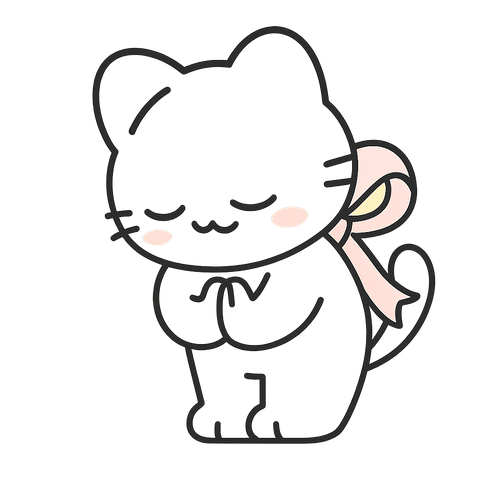
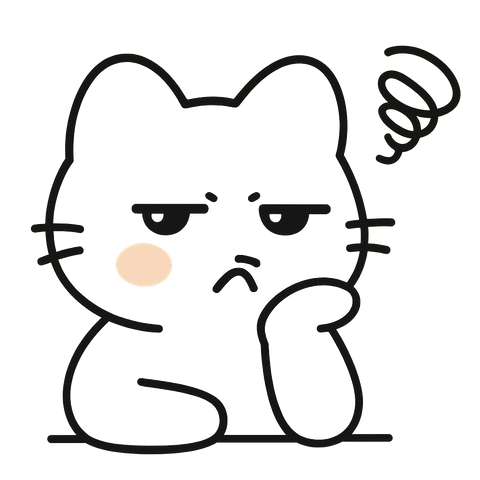
If Kakao Keeps Rejecting Your Emoticon Submissions, Read This

How Hard Is It, Really, to Get a Character Emoticon Approved?

Have you ever received a rejection email with no explanation?

There is just one line—“We have decided not to accept this proposal”—and you never find out what went wrong.

If you’ve gone through the cycle of drawing another 24 images, waiting all over again, and receiving the same one-line rejection without even knowing what to fix next, I hope this article offers some comfort.

It May Not Be a Matter of Skill

Let’s start with the numbers.

Kakao Emoticon Studio reportedly receives around 2,000 submissions every week, of which only about 100 are actually approved.

Even a simple calculation puts the competition at roughly 20 to 1.

What’s more, the review process has a reputation for not providing specific reasons for rejection.

In other words, creators are left in the dark—not even knowing what they are supposed to improve.

More surprising still is the fact that beginners are not the only ones who hit this wall.

There have been public accounts of well-known creators who had already built a following on other channels being rejected repeatedly by Kakao over several years.

In some cases, beloved characters were rejected without explanation when their creators submitted follow-up releases, eventually prompting them to take those projects to other platforms.

If getting approved means being one of the top 100, that is closer to a matter of probability than ability.

Saying it has less to do with the review and more to do with luck is not wrong.

Creators’ communities tell a similar story.

The prevailing view is that creators who already have name recognition—or who are working with an established IP—can often pass without much trouble, while unknown newcomers with original creations face a considerably higher bar.

That is why critics say luck plays a bigger role than skill. Put bluntly, the system is stacked against newcomers from the outset.

With thousands of people lining up for only a handful of spots, it is hardly surprising that most are turned away at the door.

The real problem is what this system leaves creators feeling.

After several rejections, the thought inevitably starts to creep in: “Maybe I’m just not talented enough.”

But if the approval rate is only around 5 percent, that frustration says less about your talent than it does about how narrow the door was in the first place.

One narrow gate is not the only option.

This is where Decoblocks takes a different approach.

Rather than forcing thousands of creators to compete for a limited number of slots, it lets them list their characters through the open distribution channel of the WordPress marketplace.

Because there is no bottleneck that allows only 100 submissions through each week, creators are far less likely to face the frustration of being rejected without knowing why.

Of course, there is still a basic review process.

It is not a completely unregulated system where anything and everything gets uploaded.

The fundamental difference, however, is that the review is designed not to filter out all but a select few, but to let anyone distribute their own characters as long as they meet basic quality and copyright requirements.

It is a structure in which the very idea of a competition rate does not really apply.

If Kakao’s door says, “Become one of these 100 people,” Decoblocks says, “There is someone out there who needs your character, so put it out into the world and see what happens.”

Your skill did not change just because you were rejected several times.

The door was simply narrow. You can keep trying to squeeze through that one narrow entrance, or you can take the characters you have already created to another door. Decoblocks aims to be that alternative.

Beyond Korea’s Emoticon Market: Taking Characters Global

KakaoTalk’s emoticon market has grown into an industry worth hundreds of billions of won.

There are now around 10,000 creators, with thousands of submissions reviewed every month. From the outside, it looks like a thriving ecosystem.

But anyone who actively works in that ecosystem has probably had this thought at least once.

Kakao Emoticon Releases Continue

It is not an unreasonable question. A few years ago, even Kakao set a goal of increasing the share of its overseas revenue to 30%, but it was later revealed that the company had fallen short of that target.

KakaoTalk and Naver OGQ are both excellent platforms, but by nature they operate on the traffic generated by domestic messaging services and portals.

No matter how much people love a character, the stage itself remains within Korea’s borders.

Change the Stage, Change the Audience

So what if we reframed the question? Instead of asking, “How can I sell more effectively within Kakao?” why not ask, “Why should the stage where this character gets to play be limited to Korea in the first place?”

Statistics show that roughly 40% of websites worldwide are built with WordPress.

This is not a story about one country or one language market.

It means that millions of sites running on the same foundation—from personal blogs in the United States and e-commerce sites in Europe to news outlets in Southeast Asia and small-business websites in South America—operate across different languages and currencies.

Decoblocks is a block-based plugin that distributes character stickers on this shared operating system called WordPress.

These are not stickers limited to KakaoTalk. They can be downloaded and used anywhere WordPress is installed, regardless of the user’s country.

If emoticons had to pass through the narrow doorway of a “messenger chat window,” Decoblocks characters can reach people through the far wider windows of “someone’s website” or “someone’s blog.”

A Trend Already Proving Itself

This is not wishful thinking.

North America’s licensing market for Korean-content intellectual property grew by more than 20% over the past year, and reports continued this year that Korean companies generated more than 1 billion won worth of export consultations at licensing trade shows in the United States.

Whether it is character brands, webtoons or K-pop IP, the growing number of overseas buyers seeking out Korean content is no longer a story limited to major corporations.

The problem is that individual creators have not had an easy way to join this movement.

Renting a booth at a licensing fair, arranging meetings with overseas buyers and reviewing contracts are simply too formidable for one person to handle alone.

Decoblocks is designed to remove that mountain.

The moment a creator installs the plugin, their character is effectively placed on a distribution network capable of reaching WordPress users around the world.

This is not about competing with domestic platforms. It is an invitation to move to a stage where competition is not necessary in the first place.

The Designer Draws the Character. The System Handles the Rest.

Joining Decoblocks does not mean suddenly having to market in English or deal directly with overseas buyers.

The designer’s job remains exactly the same: drawing the character.

The plugin and marketplace structure handle the tedious work, including issuing and revoking licenses, processing payments, displaying content in multiple languages and managing distribution at the domain level.

A character drawn by one creator appearing simultaneously on a blog in Seoul, a shopping site in Tokyo and a personal website in New York is not a vision for some distant future. It is something that can begin today simply by placing character content on the already existing infrastructure of WordPress.

If the emoticon market has always felt too narrow, we want to point out that there is another option: instead of working harder within a limited market, expand the market itself.

Decoblocks is working to turn that option into reality.

Who Will See This Character Outside Korea?

Can Kakao Emoticon Artists Really Make Money? The Numbers Tell the Story

The Reality of Being a Kakao Emoticon Artist

Plenty of people have considered becoming an emoticon artist at one point or another.

For years, there has been a widely circulated idea that anyone with strong drawing skills can make money without a company or even an office.

And Kakao’s emoticon platform has genuinely grown into one of South Korea’s biggest creator ecosystems. Ten years after its launch in 2011, it had produced 10,000 creators.

But look a little more closely at those figures, and it becomes clear just how far the notion that “all you need is the ability to draw” is from reality.

It’s a Huge Market

Data released by Kakao itself makes the platform’s scale unmistakable.

In 2021, the platform’s 10th anniversary year, there were 10,000 creators and 300,000 emoticon sets had been launched cumulatively. The total revenue shared among creators stood at roughly 700 billion won.

Four years later, figures announced in 2025 showed further growth.

The number of individual emoticon products released had surpassed 700,000, while the market was worth more than 1.2 trillion won as of December 2024.

There are also genuine breakout success stories—the kind almost everyone has heard about, involving creators who made billions of won from a single emoticon set.

As many as 146 emoticon sets have generated more than 1 billion won in cumulative sales, while 17 have topped 10 billion won.

But Look Beneath the Surface

The real question is how widely that success is distributed.

Of the more than 700,000 emoticon sets released, only 2,885 have generated over 100 million won in cumulative sales.

That works out to just over 0.4%. The 146 sets that surpassed 1 billion won represent 0.02%, while the 17 that exceeded 10 billion won account for just 0.002%.

In other words, the overall market is certainly large, but most of its revenue is concentrated among a tiny minority. What remains is divided into very small—and often exceedingly small—shares.

The reason stories about people “making it big with emoticons” attract so much attention is that such success is rare, not typical.

That’s Not Where the Story Ends

The gap becomes even clearer when you look at how the revenue is divided.

Suppose an emoticon set sells for 2,500 won. After the app store takes its 30% commission, VAT is deducted from the remainder, and Kakao and the creator split what is left equally.

The creator ends up with roughly 750 won per sale—about 30% of the purchase price.

On top of that, getting into the market in the first place is no easy feat.

It is said that around 1,500 emoticon proposals are submitted each week, but only about 20 make it through review and reach the market.

That amounts to an acceptance rate of roughly 1%. Even if creators complete an entire set before submitting it, most proposals never make it into the world.

That’s Why a Different Structure Is Needed

The point of laying out these figures is not to disparage the emoticon market.

Quite the opposite.

If only a tiny minority can make substantial money even in a market this large and well established, the reason may have less to do with talent than with the way the system is structured.

When every creator is competing on one platform, under one set of review standards, and in one market—KakaoTalk’s domestic user base—the competition can only become more intense.

This is where Decoblocks is trying to do things differently.

Creators can start selling as soon as they make a character, without waiting for approval from a review committee. And instead of presenting their work only to KakaoTalk users in South Korea, they can showcase their characters to WordPress users around the world.

Of course, as a newly launched marketplace, it cannot yet claim to be a proven, large-scale market like Kakao’s.

But rather than creating a system in which everyone lines up at a single narrow gate, the aim was to build one with lower barriers to entry and a market that is open to a much wider audience.

For people with artistic skill, the answer may not be learning how to compete even more fiercely at an increasingly narrow gate. It may be creating another door.

This post applies several of Decoblocks’ various writing and design tools, but the content itself is based entirely on facts as they stand in reality.

The Essential Travel-Post Element That Doubles Dwell Time

Travel posts are packed with information.

There is so much to cover—from routes and prices to practical tips and photos—that the text naturally grows long.

But content-marketing research tends to agree on one point.

Readers are more likely to stay to the end when information is broken into shorter sections with a clear rhythm, rather than presented as one uninterrupted block.

The problem is that travel posts are structurally ill-suited to creating that rhythm.

There may be plenty of photos, but without anything to connect one image to the next, the post reads like a photo album. As soon as the text starts to feel too long, readers quietly stop scrolling.

Travel blogs tend to have particularly high drop-off rates

The “Breathing Room” Between Photos Can Determine Dwell Time

Look through articles about blog dwell time and two keywords come up again and again: visual elements and pacing.

The idea is simple: readers are less likely to tire when there are elements—such as high-quality images, infographics, or tables—that give them a brief break from the text.

Applied to travel posts, the photos themselves are already plentiful.

What is missing is the “breathing room” between photos and between paragraphs. Without it, even the most beautiful images cannot keep the post from feeling like a list of information.

I once wrote two versions of a travel post using the same itinerary and the same photos.

One was clean and understated, relying only on photos and text. The other introduced a character at various points. The result was fairly clear.

The version without a character conveyed the information effectively, but it was easy to see exactly where readers began dropping off.

The version with a character was different.

Even a single character with a weary expression next to a photo of the accommodation conveyed the feeling without requiring the words “It was really exhausting.”

Readers also kept scrolling, curious to see what the character would be doing in the next frame.

This ties in with an effect commonly discussed in character marketing.

A character turns a brand or piece of content into a familiar image, and when consumers develop positive feelings toward that character, those feelings extend to the brand as a whole.

Applied to a travel blog, the photos may be different every time, but the character appears consistently in every post. That repeated familiarity is ultimately what makes readers recognise it as “this blog.”

That’s why Decoblocks is needed

DECOBLOCKS

Here is the takeaway.

For a travel post to hold readers’ attention, it needs something that creates rhythm between the information. When that something is a character, it can do more than provide visual appeal—it can also add emotion and familiarity.

The difficulty is that drawing and positioning one manually every time you write a post is not particularly practical.

DECOBLOCKS

Decoblocks is designed to solve that problem inside the WordPress editor, as easily as inserting a single block.

There is no need to learn a separate design tool or create something from scratch each time. You can place a character wherever you want, giving the post the rhythm it needs.

In the end, what travel posts needed was not better photos, but something to connect the images. Decoblocks is the easiest way to fill that role.

This article incorporates several content-decoration techniques to showcase Decoblocks’ various features. Try designing your own posts with combinations that suit your personal taste.

What actually changes when a character is present—and when it isn’t

Why Some Blogs Get Read—and Others Get Abandoned

Why the Time Readers Spend Matters

A browser tab opens. A few scrolls later, a finger quietly taps the back button.

We often dismiss that brief moment with a shrug: “I guess it just wasn’t their thing.”

But those few seconds may have had less to do with personal taste than with the way the page was designed.

Google has a name for what happens in those few seconds.

Dwell time: the amount of time it takes someone who clicked a search result to return to the search results.

Google has never fully disclosed exactly how it uses this metric. However, a large-scale ranking correlation study by SEO firm Moz found a clear relationship between dwell time and Google search rankings.

In other words, pages that hold readers’ attention longer are more likely to rank near the top of search results.

What’s interesting, though, is that keeping readers around doesn’t necessarily require a mountain of information.

The 260% Difference One Video Made

Video marketing platform Wistia ran a remarkably simple experiment on its blog.

It added just one video to an existing post. The result: a 260% increase in time on page.

A single “visual element” created a difference of nearly three times—not a change in the content’s logic or the amount of information it contained.

That wasn’t a fluke.

People respond far more immediately to images than they do to written sentences.

Text has to be interpreted. An image can often be understood on the spot.

That’s why an image placed between paragraphs gives readers a brief moment to reset before deciding whether to continue to the next one.

Writing without a pause for breath feels exhausting—and when readers feel out of breath, they leave.

The 94% Difference One Photo Made

According to data compiled by marketing consultant Jeff Bullas, posts that included images received 94% more total views on average than posts without them.

That’s a difference of almost two to one.

A study by Blog Pros, which has analyzed blog performance, also found that blogs ranking near the top of search results tended to place an image roughly every 350 words.

Look at the numbers alone, and the takeaway might seem to be: “Just add more images.” But there’s an important qualification. Not all images have the same effect.

A Slow-Loading Image Can Be Worse Than No Image at All

An experiment by user-experience research firm Nielsen Norman Group illustrates the point precisely.

When the same image took eight seconds to load, users looked at it for just 1% of their total time on the page.

When the image loaded quickly, however, the time users spent looking at it rose to 20%. That’s a twentyfold difference.

In other words, an image doesn’t increase dwell time simply by being there.

It needs to be lightweight, quick to load and woven naturally into the rhythm of the writing.

Forcing a large, heavy photo into a page can actually drive readers away from the very paragraph it was meant to support.

Persuasion Starts with the Senses, Before Logic

Another interesting finding came from research conducted jointly by the University of Minnesota and 3M.

Presentations containing visual elements were 43% more effective at persuading audiences than presentations made up of text alone.

Even when the logic is flawless, it is the senses that open people’s minds before they reach the argument itself.

The same is true of blogs.

No matter how accurate the information may be, if readers leave the page before they reach it, that information might as well not exist.

That is ultimately what the dwell-time metric tells us.

Good Writing Doesn’t Begin with Information. It Begins with Rhythm.

That’s Why Decoblux Was Needed

If we had to sum up all the data so far in one sentence, it would be this: what keeps people on a page is not dense information, but a light, sensory rhythm.

But that rhythm can’t be created with just any image.

Stock photos can feel impersonal, while oversized original images lose readers during loading. More importantly,

a photograph can convey information, but not necessarily emotion. The only thing that can smile, react with surprise or nod along between sentences is a character—lightweight, fast and brought to life by a human touch.

Decoblux is the service that began precisely at this point.

A character sticker placed between paragraphs, in that brief moment when readers pause for breath. An image refined to sit lightly anywhere in WordPress. Above all, something that builds dwell time through expression rather than data. A good article is no longer complete simply because it is well written.

Only when it gives readers room to breathe can it truly become a piece they read to the end.

This article uses several Decoblux writing tools to demonstrate the service’s range of features. For a visually consistent article, it is aesthetically effective to maintain a coherent composition across the tools you choose.